
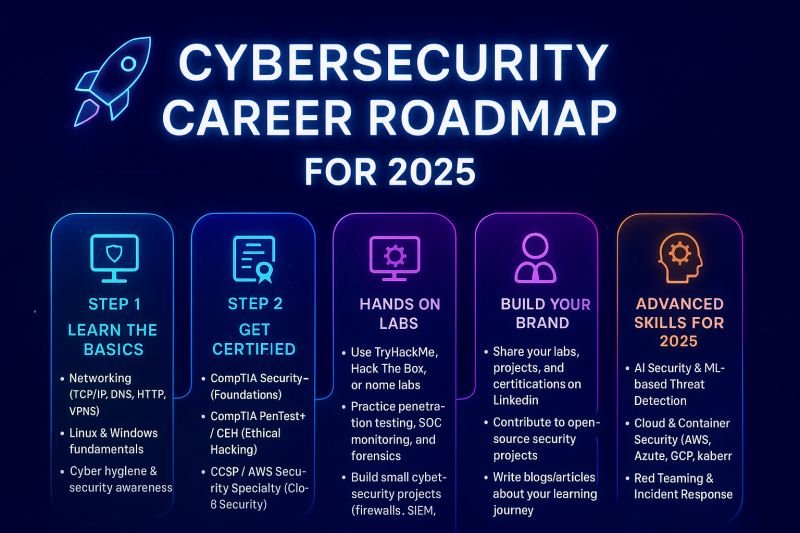
A Beginner’s Complete Guide
Cybersecurity is no longer optional—it’s one of the fastest-growing and most in-demand career fields worldwide. As cyber threats increase across businesses, governments, and institutions, the demand for skilled cybersecurity professionals continues to rise.
If you’re wondering how to start a career in cybersecurity in 2025, this guide will walk you through everything you need to know—even if you have no prior experience.
Why Choose Cybersecurity as a Career?
Cybersecurity offers:
- High global demand across all industries
- Strong salary growth and long-term career stability
- Opportunities for remote and international work
- Multiple career paths for technical and non-technical learners
With digital transformation accelerating, cybersecurity professionals are becoming essential everywhere.
Do You Need a Technical Background?
No. Many successful cybersecurity professionals started with zero technical background.
What you really need:
- Curiosity and problem-solving skills
- Willingness to learn continuously
- Structured training and hands-on practice
Cybersecurity has entry-level roles designed specifically for beginners.
Step 1: Understand Cybersecurity Basics
Start by learning the fundamentals:
- What cybersecurity is and why it matters
- Types of cyber threats (malware, phishing, ransomware, etc.)
- Basic networking and system concepts
- Introduction to security principles (CIA triad, risk, controls)
A strong foundation makes advanced learning much easier.
Step 2: Choose a Cybersecurity Career Path
Cybersecurity is a broad field. Some popular entry and mid-level roles include:
- SOC Analyst – Monitors and responds to security incidents
- Cybersecurity Analyst – Protects systems and networks
- Penetration Tester (Ethical Hacker) – Finds vulnerabilities before attackers do
- Cloud Security Specialist – Secures cloud environments
- Governance, Risk & Compliance (GRC) – Focuses on policies and regulations
You don’t need to decide immediately—many skills overlap at the beginning.
Step 3: Learn Through Hands-On Training
Cybersecurity is a practical skill, not just theory.
Look for training that includes:
- Hands-on labs
- Real-world scenarios
- Simulated attacks and defenses
- Practical security tools and workflows
Hands-on learning builds confidence and real job readiness.
Step 4: Earn Industry-Recognized Certifications
Certifications help validate your skills and improve employability.
Beginner-friendly certifications often cover:
- Cybersecurity fundamentals
- Networking and system security
- Entry-level defensive skills
Certifications show employers that you are serious, trained, and job-ready.
Step 5: Build Skills, Not Just Certificates
Employers look for skills + proof, not certificates alone.
Focus on:
- Understanding how attacks happen
- Learning how defenses work
- Practicing incident response
- Developing problem-solving ability
Hands-on experience combined with certification preparation is the ideal approach.
Step 6: Prepare for Entry-Level Roles
To get job-ready:
- Follow a structured learning path
- Practice regularly
- Learn basic security tools
- Understand real-world security use cases
Entry-level cybersecurity roles are designed to train you further on the job.
Step 7: Keep Learning and Advancing
Cybersecurity evolves constantly. To grow your career:
- Upskill with advanced certifications
- Specialize in areas like cloud security or threat hunting
- Stay updated with industry trends
Continuous learning is part of every successful cybersecurity career.
Final Thoughts
Starting a career in cybersecurity in 2025 is achievable, rewarding, and future-proof—even for beginners.
With the right training, hands-on practice, and certifications, you can build a strong foundation and grow into a global cybersecurity professional.
🚀 Ready to Begin?
Start your cybersecurity journey with SecByte and gain the skills, certifications, and confidence needed to succeed in the security industry.
Your future in cybersecurity starts today. 🔐
You May Also Like
-
Dec 27, 2025
Common Cybersecurity Myths Beginners Should Ignore What You Really Need to Succeed Cybersecurity is one of the most in-demand careers...
-
Dec 27, 2025
Why Hands-On Labs Matter in Cybersecurity Training From Theory to Real-World Skills Cybersecurity is not a theory-based field. Knowing concepts...
-
Dec 27, 2025
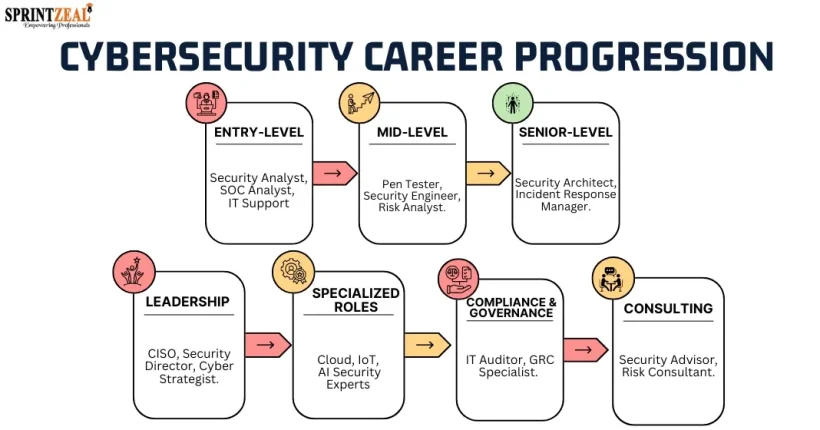
Choose the Right Role for Your Future Cybersecurity Career Paths Explained Choose the Right Role for Your Future Cybersecurity is...

-
Dec 27, 2025
Top Cybersecurity Certifications Employers Trust A Practical Guide for Career Growth In today’s competitive job market, cybersecurity certifications play a...
Sign up to receive our latest updates
Get in touch
Call us directly?
+1 753-779-2177
+8801680032529
Visit Us
Bussiness Address :Head office:
30 N Gould St Ste R Sheridan, WY 82801,USA
Branch 1:
C/82,17 SecByte ,Gazipur Sadar,Gazipur,Dhaka,Bangladesh
contact@secbyte.org
Need some help?
Partners List

- © 2026 SecByte.org rights reserved.